Editor’s note: This is part one of a two-part story on Youth Services of Bryan County.
More than five decades ago, a local judge saw a need for alternative programs for children who came through juvenile court and that led to the founding in 1971 of an agency that would become Youth Services of Bryan County.
Dot Phelps was the first director of the program, a position she held for three years.
She was working in the psychology department of Tulsa Schools when she was recruited to be the first director of Youth Services of Bryan County.
“I said, ‘I’m on for a challenge,’ and they said, ‘It will sure be that,” Phelps recalled.
Phelps spoke of what happened before she was hired to direct the program.
Pat Phelps, who later would become Dot’s husband, was the juvenile judge and he did not have any alternatives other than to incarcerate juveniles in detention facilities which he did not feel was appropriate for all circumstances.
Judge Phelps approached the grant-writing agency, Southern Oklahoma Development Association (SODA). The agency prepared a grant for Bryan and Atoka counties, plus Ada and Norman were included to provide emergency youth shelters and counseling services, Dot Phelps recalled. She said Judge Phelps wanted an alternative for some offenders because when a juvenile is sent to a detention facility, you’re looking at recidivism for sure after the juvenile is released.
“That’s how it originally started that he petitioned them to help him with some other alternative other than incarceration in juvenile detention facilities,” Phelps said.
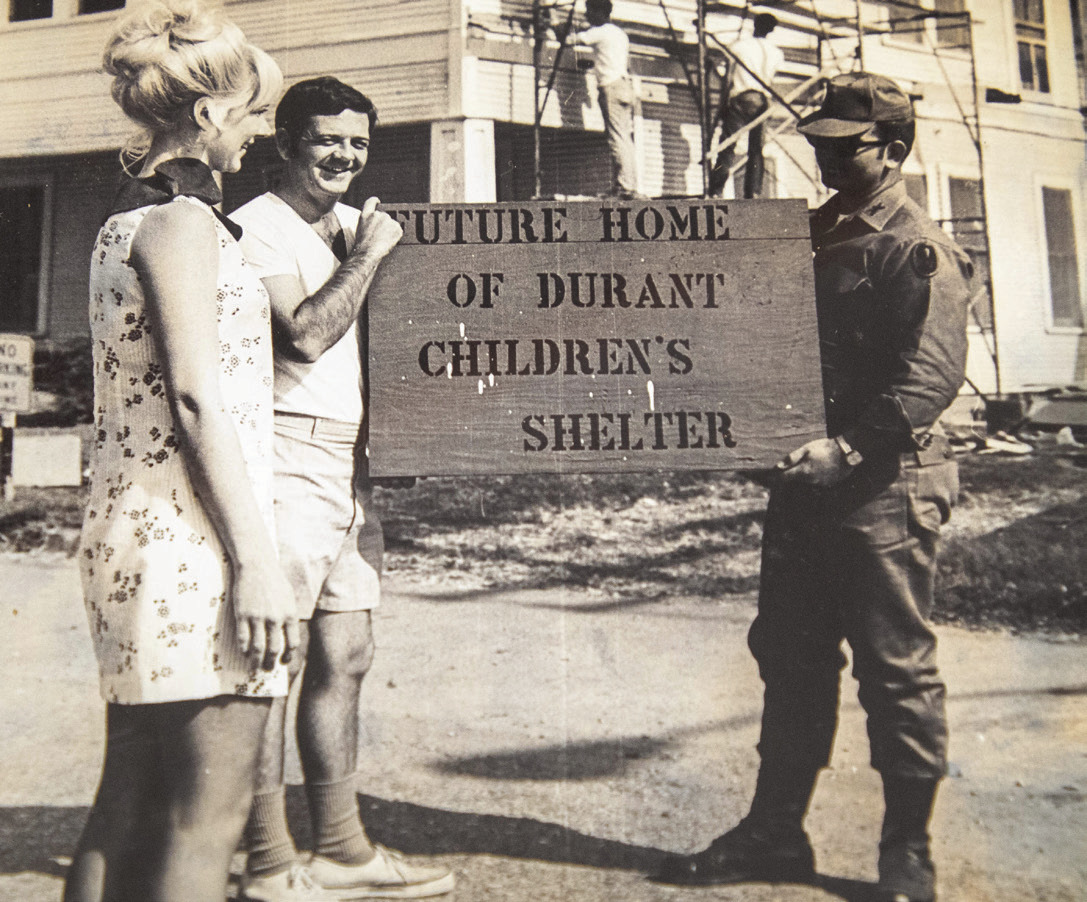
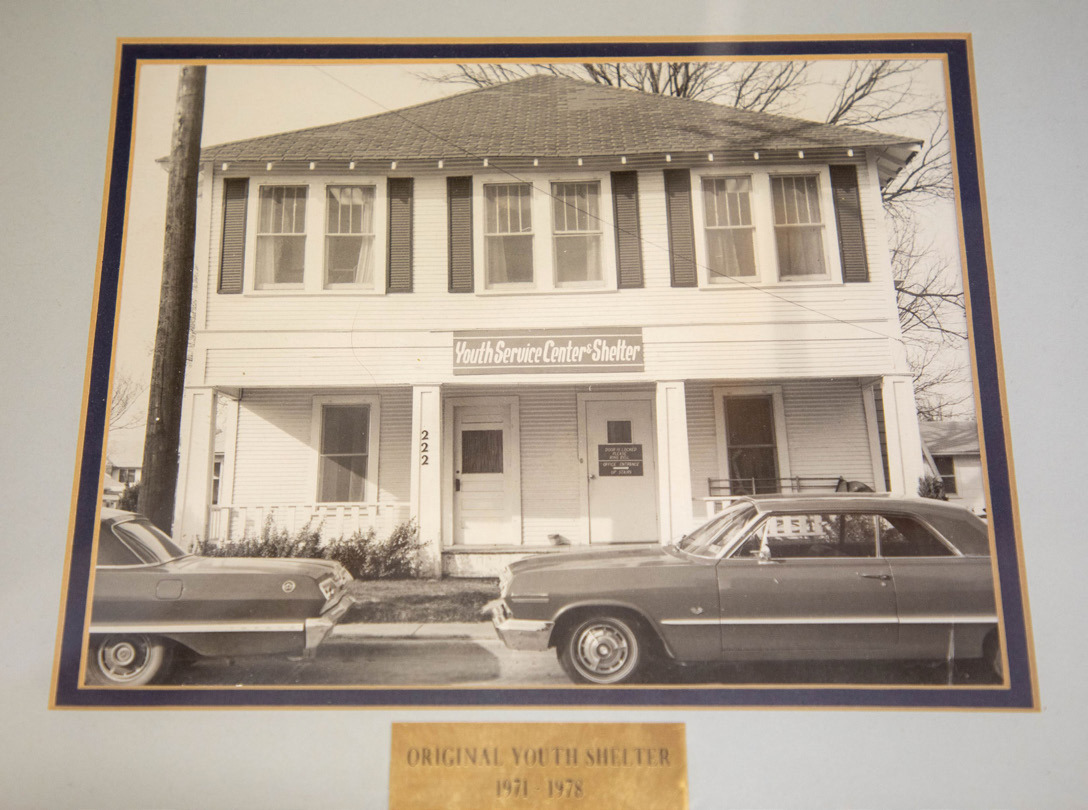
The agency didn’t have a building or a staff when Phelps was hired. At the start, Southeastern provided two offices in the counseling center and Phelps hired a secretary. A board was established and an old two-story house was moved next door to the Durant Democrat newspaper office.
Phelps said getting the shelter ready became a community activity with the National Guard working there several times on Saturdays. Southeastern fraternities were among those who helped and the house required a lot of work, including sheet rocking, cabinets, plumbing and bathrooms.
Bill Trent installed the plumbing and cabinet makers made the cabinets for the kitchen. Sunday school groups helped furnish the bedrooms for the children and house parents.
The house was an emergency shelter for youth and it wasn’t a detention center, Phelps said.
“It was like a home and there were house parents there 24 hours a day,” Phelps said. “A set of house parents for the week, 24 hours a day, and then an alternate set of house parents for the weekend. The house parents lived there with the kids but it was like an emergency youth shelter if kids were kind of defiant or if DHS had kids that they had to place and they didn’t have a place for them, they would come and stay there for a day or two.”
Phelps recalled there were a couple of children whose parents had their parental rights terminated, so they stayed there for a few months. However, that was an exception and it was usually just a short-term stay until the children were placed in foster care or able to return to their families.
There was no charge for the services and the funds were from grants and community contributions. Phelps said it was really exciting that the community got behind the program.
“There was a ribbon cutting and Governor (David) Hall came down,” Phelps said. “The newspaper was wonderful. I would just call them and say, ‘We need a story about this,’ and they would write a story.”
The agency worked to obtain grants every year to keep it funded, according to Phelps.
“When I left, I think DHS gave us a caseworker that they paid for but they were assigned to us,” Phelps said. “That was Gary Self. Gary was the first DHS social worker that was assigned to Youth Services and then we had a couple others and Southeastern would give us graduate students because they were doing graduate school in counseling by that time so we would get some really awesome graduate students that I would supervise. It was before Oklahoma had licensing for counselors, way before.”
Phelps said they were surprised at how quickly the shelter caught on because DHS really needed a shelter when they had placement issues. She estimated that in the first year, approximately 10 children per week were placed at the shelter, usually only for several days.
A “Big Brothers and Big Sisters” program was also started during the first or second year of the program, Phelps said. These were people who would help mentor the children and also were able to do things with them to make them feel better.
Phelps recalled how supportive everyone in the community was for the youth shelter, including law enforcement agencies, the fire department, city manager, school superintendent and many others. She credited the support from so many with making the program a success.
“We had key people on the board that were in leadership positions of important adjunct agencies and that was really helpful,” Phelps said.
She said that the desire by Judge Phelps for alternatives to juvenile incarceration with the goal of reducing recidivism was forward thinking for that era.
“But see, he knew that 55 years ago,” Phelps said. “He knew that which was probably pretty progressive thinking. That was the inception of the entire thing from a juvenile judge not accepting just extreme punishment for certainly violations, but not violations that could be remediated in other ways.”
The program is still going strong with an expansion of its facilities at 1105 Lynnwood Drive in the works and also providing more services to children and families.
“That program was so exciting to see so many people want to make contributions to kids,” Phelps said. “That felt really exciting to see that happen and be part of that.”